Beschrijving
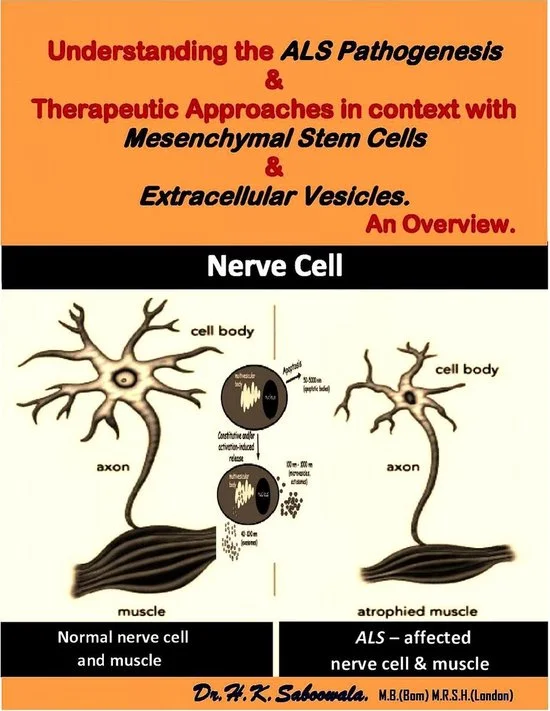
Understanding the ALS Pathogenesis & Therapeutic Approaches in context with Mesenchymal Stem Cells and Extracellular Vesicles. An Overview.
Amyotrophic lateral sclerosis (ALS) is a fatal neurodegenerative disease characterized by progressive muscle paralysis determined by the degeneration of motoneurons in the motor cortex brainstem and spinal cord.
The ALS pathogenetic mechanisms are still unclear, despite the wealth of studies demonstrating the involvement of several altered signaling pathways, such as:
Mitochondrial dysfunction,
Glutamate excitotoxicity,
Oxidative stress and
Neuroinflammation.
To date, the proposed therapeutic strategies are targeted to one or a few of these alterations, resulting in only a minimal effect on disease course and survival of ALS patients.
The involvement of different mechanisms in ALS pathogenesis underlines the need for a therapeutic approach targeted to multiple aspects.
Mesenchymal stem cells (MSC) can:
Support motoneurons and surrounding cells,
Reduce inflammation,
Stimulate tissue regeneration and
Release growth factors.
On this basis, MSC have been proposed as promising candidates to treat ALS.
However, due to the drawbacks of cell therapy, the possible therapeutic use of extracellular vesicles (EVs) released by stem cells is raising increasing interest.
An attempt has been made as usual in this informative E-Booklet to summarize the main pathological mechanisms involved in ALS and the related therapeutic approaches proposed to date, focusing on Mesenchymal stem cells (MSC) therapy and their pre-clinical and clinical applications.
Moreover, how and why the extracellular vesicles (EVs) could provide novel opportunities for ALS treatment has been elucidated along with several relevant illustrations and Transmission Microscopic views.
…Dr. H. K. Saboowala.
M.B.(Bom) .M.R.S.H.(London).